
Unlocking the Power of Visual Complexity in Puzzle Solving
Updated: Apr 10
In a world where decisions are made in an instant and strategies constantly shift, the ability to quickly assess complexity and adapt is crucial. This is where visual complexity comes into play. The patterns, shapes, and structures we observe influence how we process information. They also shape how we make decisions, form strategies, and navigate challenges. CircZles, especially those designed with intricate visuals, offer a unique opportunity to train the brain. Engaging with puzzles that challenge your visual complexity tolerance enhances your ability to navigate complexity, strategize, and perceive the world more nuanced. Let’s explore how visual complexity in puzzles can reshape our thinking and problem-solving approaches.
Understanding Visual Complexity
Visual complexity refers to the intricacy and layering of a design or image. It considers how many elements are present and how they interact. It’s not just about how much you see; it’s about how your mind processes and organizes that information. For instance, a highly detailed pattern with varying colors and shapes forces the brain to sort and analyze multiple variables at once. In contrast, a simple design with fewer elements might feel straightforward and easy to interpret.
When faced with visual complexity, our brain works harder to create patterns and connections. This effort can lead to sharper decision-making and improved problem-solving skills. Visual complexity is everywhere—from puzzle designs to the way we perceive our environment. By challenging ourselves with visually complex puzzles, we train our brains to process and organize information more strategically and effectively.
The Impact of Visual Complexity on Decision-Making
Engaging with visual complexity doesn’t just train your eye; it sharpens your decision-making process. When we encounter a complex visual scene, we must break it down, understand the relationships between different elements, and make sense of it as a whole. This mirrors the decision-making process in strategy, where we assess multiple factors, evaluate risks, and weigh various options.
A puzzle with intricate patterns, like CogZart’s Circzles, challenges the brain to identify how the pieces fit together. This task is not only visual but also cognitive. Breaking down and reconstructing complex visual information trains the brain to make faster, more effective decisions in other areas of life—whether in business, personal challenges, or creative projects.
Visual Complexity and Strategic Thinking
Strategic thinking requires analyzing complex situations, recognizing patterns, and anticipating outcomes. Puzzles that present visual complexity, such as those with geometric designs or abstract patterns, engage the brain in ways that enhance these skills. When you work through a complex puzzle, you’re essentially building your strategic thinking muscle.
The brain learns to prioritize certain pieces of information, shift focus between different aspects of the design, and adjust strategies as needed. Just like in any strategic game or business decision, you need to recognize patterns in the chaos, identify the most important elements, and adapt your approach. The more you engage with complex puzzles, the more you train your mind to handle complicated, multifaceted situations with ease and precision.
Pattern Recognition and Problem Solving
At the heart of visual complexity lies the ability to recognize patterns. Puzzle-solving, especially with complex patterns, requires the brain to identify repeating shapes, colors, and structures. This skill is directly transferable to real-life problem-solving. Whether troubleshooting a complex issue at work, solving a creative challenge, or navigating a tricky situation, spotting underlying patterns allows you to break down problems and find solutions more efficiently.
By engaging with visual complexity, your brain becomes more adept at recognizing these patterns, processing information quickly, and applying it to various situations. This can lead to quicker, more accurate problem-solving in both personal and professional contexts.
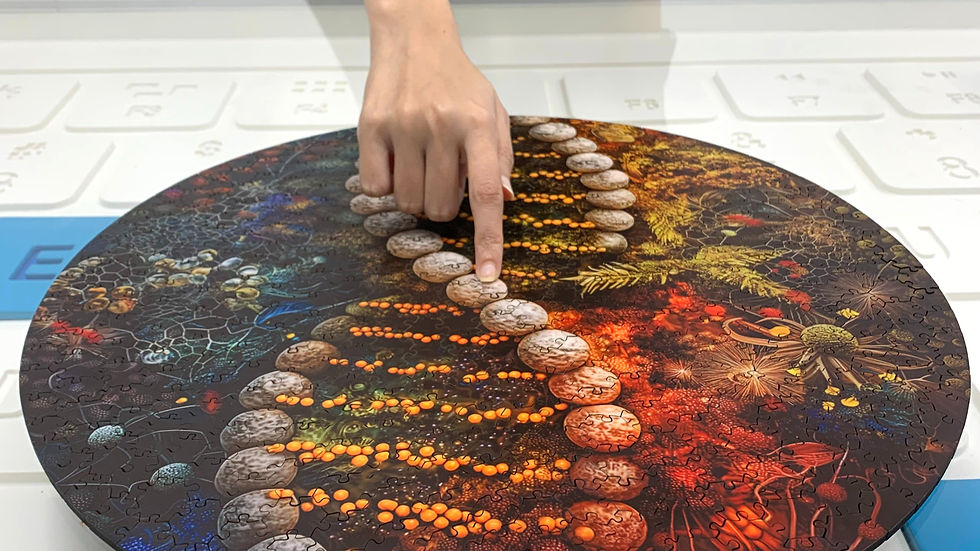
Cognitive Benefits of Engaging with Visual Complexity
Engaging with visual complexity provides numerous cognitive benefits. These puzzles challenge not only the visual system but also working memory, spatial reasoning, and attention to detail. As you solve puzzles with intricate designs, your brain gets a workout, strengthening these cognitive skills over time.
This is why visual complexity is often used in cognitive training and therapy. It pushes the brain to work in ways that promote mental agility and cognitive flexibility. The mental benefits extend beyond puzzle-solving. Regularly engaging with complex visuals can lead to better focus, improved attention span, and enhanced cognitive function in daily tasks. The more you expose your brain to these challenges, the more it adapts, becoming quicker and more efficient at processing complex information.
Incorporating Visual Complexity into Your Daily Routine
You don’t need to spend hours on puzzles to reap the benefits of visual complexity. Here’s how to incorporate them into your day to sharpen your mind and improve your strategic thinking:
Start small, then challenge yourself: Begin with puzzles of moderate complexity and gradually increase the difficulty level as your skills improve.
Mix it up: Switch between puzzles that challenge different cognitive skills—such as Circzles (which require pattern recognition) and Cogdokus (which require logical thinking).
Use puzzles during breaks: Engage with a puzzle during work breaks to refresh your mind and give it the mental exercise it needs.
Set a puzzle goal: Whether it’s completing a puzzle within a certain time or solving a more complex design, setting a goal helps sharpen your focus and decision-making.
By making visual complexity a part of your daily routine, you’re training your mind to process and organize information more effectively, which will carry over into other areas of your life.
Final Thoughts
Visual complexity is more than just a puzzle challenge; it’s a tool for sharpening your mind and enhancing your decision-making and strategic skills. By engaging with puzzles featuring intricate patterns and designs, you’re giving your brain the opportunity to work through complex visual information. This fosters cognitive flexibility and mental clarity. The more you engage with visual complexity, the better equipped you’ll be to handle life’s challenges with strategic thinking and problem-solving abilities. Your Mind Matters, and incorporating visual complexity into your routine is one of the best ways to keep it sharp and prepared for anything life throws your way.
Citation:
Research shows that visual processing actively shapes decision-making and cognitive flexibility, with the brain adapting how it interprets visual information depending on task demands—highlighting how engaging with complex visual stimuli trains flexible thinking and context-sensitive decision processes. Science News Today
Studies on visual complexity and task difficulty demonstrate that processing complex visual patterns requires greater cognitive engagement and influences cognitive efficiency, underscoring how visually intricate tasks (like complex puzzles) challenge and develop higher-order thinking skills. MDPI


Comments