
Slow Thinking in a Fast World: How Wooden Puzzles Rebuild Mental Patience

We respond quickly, skim endlessly, and decide faster than we can reflect. While this efficiency feels productive, it quietly erodes an essential cognitive skill: slow thinking.
Slow thinking is the mind’s ability to pause, evaluate, and reason deliberately. Wooden puzzles create one of the rare environments where this skill can return naturally—without forcing mindfulness, rules, or digital detoxes.
What Is Slow Thinking?
Slow thinking refers to deliberate, effortful mental processing. It activates when the brain has time to:
Evaluate patterns carefully
consider multiple possibilities
avoid impulsive conclusions
Unlike fast, reactive thinking, slow thinking strengthens judgment, patience, and long-term clarity.
Why Modern Life Disrupts Slow Thinking
Most digital experiences reward immediacy.
Instant results
Auto-complete decisions
Endless short-form stimulation
Over time, the brain adapts by prioritizing speed over depth. This makes sustained focus uncomfortable and patience feels inefficient—even when it’s necessary.
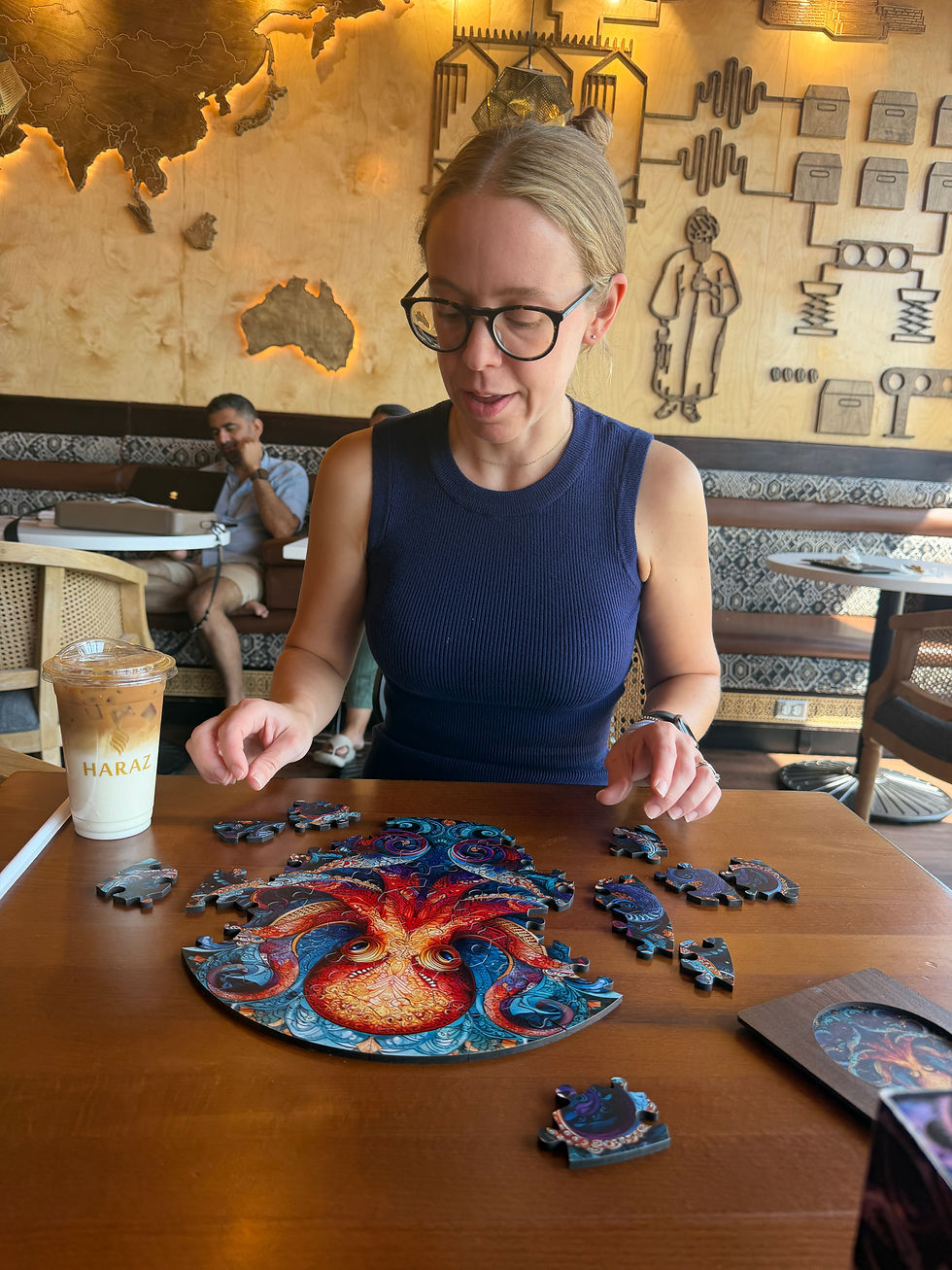
Why Wooden Puzzles Naturally Encourage Slow Thinking
Wooden puzzles do not rush you. They introduce:
physical resistance
visible progress instead of instant rewards
problems that unfold gradually
This structure gently nudges the brain into slow thinking mode, where attention settles and decisions become more intentional.
The Role of Constraint in Mental Patience
Counterintuitively, limits improve thinking. Adult Jigsaw puzzles offer:
fixed pieces
finite outcomes
no shortcuts
These constraints prevent mental skipping and force the brain to stay present with each decision. Slow thinking thrives in environments where attention cannot escape easily.

How Slow Thinking Improves Everyday Decisions
Regular engagement with slow-thinking activities improves:
decision confidence
emotional regulation
tolerance for ambiguity
When the brain practices patience in low-stakes settings like puzzles, it carries that calm into work, conversations, and problem-solving.
Using Adult Jigsaw as a Slow-Thinking Reset
You don’t need hours. Wooden puzzles work best:
between intense work sessions
after prolonged screen use
during mental restlessness
Even 15–20 minutes helps recalibrate the mind away from urgency and back toward clarity.
Final Thought
Speed has its place—but not everywhere. Slow thinking allows depth, accuracy, and meaning to return to the way we process the world. CogZart Puzzle quietly retrain this skill by removing pressure and replacing urgency with intention.
In a fast world, patience becomes a luxury. Wooden puzzles help you reclaim it—one piece at a time.
Citations
Research on dual-process theory highlights the importance of slow, deliberate thinking in complex decision-making and reasoning. Kahneman, D. Thinking, Fast and Slow. Read more.
Studies on cognitive pacing show that activities requiring sustained attention improve patience, focus, and mental endurance. American Psychological Association (APA). Read more.


Comments