
Beyond Therapy: How Preventive Brain Training Redefines Self-Care in India
Updated: Apr 8

Self-care often starts only after overwhelm has already settled in. We try to fix the mind when something feels “wrong.” But real self-care is not an emergency response. It is a rhythm.
A better approach is simple: train your brain before you treat it. Because mental wellness thrives on prevention, not panic.
The Self-Care Blind Spot
Many of us invest in fitness routines, skincare rituals, sleep trackers, supplements, and productivity tools, but barely anything in daily cognitive health. Meanwhile, stress, digital fatigue, and emotional overload keep rising.
What is missing is not motivation. It is accessible, stigma-free habits that help the mind stay steady on ordinary days, not just difficult ones.
Why Preventive Brain Training Works
Your brain adapts to what you repeatedly do. Small, hands-on creative actions can strengthen focus, working memory, emotional balance, and stress tolerance, one micro-moment at a time.
Research also shows that making art can lower stress hormone levels. In one study, participants showed a decrease in cortisol after 45 minutes of art-making. Taylor & Francis Online
Preventive brain care does not require clinics. It requires consistency, repetition, and meaningful sensory engagement.
A Screen-Free Ritual That Fits Real Life
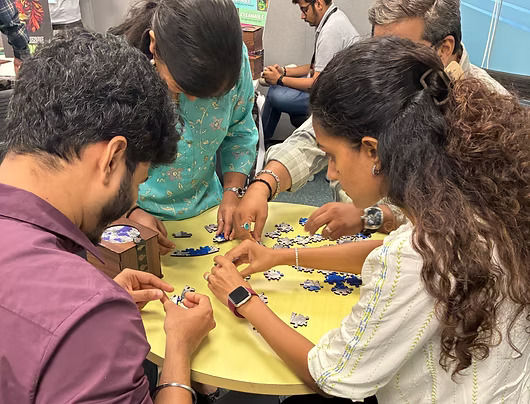
This is where handcrafted wooden puzzles shine. They turn mental fitness into a tactile ritual that fits into everyday schedules.
At Adult Jigsaw, we design puzzles for adults who want calm focus without screens. Think limited edition artistry, intricate cuts, and signature formats like hexagonal and CircZles style builds where art meets puzzle, and the mind returns to presence.
Collections like Sacred Geometry, Carbon, Imaginarium, and Antariksh are built for mindful challenge. Add the Puzzle Saver Board, and the ritual becomes effortless to return to, even across busy weeks.

Why “Treating It Later” Is Not Enough
Modern life keeps the brain in constant alert mode: notifications, deadlines, noise, comparison. By the time symptoms show up, stress patterns are already wired deep.
Neuroscience reviews show chronic stress can change the structure and function of the prefrontal cortex, a region crucial for attention, decision-making, and emotional regulation. SAGE Journals
Preventive brain training creates a buffer. It helps you bounce back faster, think more clearly, and stay emotionally steady.
Tiny Rituals, Tangible Results
Preventive cognitive care does not need an hour. It needs intention.
Try:
One wooden puzzle round before opening your laptop
Ten minutes of sorting pieces during a midday slump
A short wind-down session at night instead of scrolling
No stigma. No screens. Just a calm practice, your brain can feel.
Final Thought
You train your body to stay fit. You can train your brain the same way. Adult Jigsaws are not just a pastime. They are for daily maintenance for attention, clarity, and emotional balance.
This is conscious gifting for yourself. This is where art meets CircZles.
Citations
Mental health in India is widespread, and the treatment gap is huge.
The National Mental Health Survey of India (2015–16), led by NIMHANS, found that around 13.7–15% of Indian adults live with a diagnosable mental disorder, and the treatment gap for common mental disorders is estimated to be 70–92%, meaning the majority receive no formal support. indianmhs.nimhans.ac.in+2Ministry of Health and Family Welfare+2
Chronic stress literally reshapes the brain.
Neuroscience research shows that long-term stress can alter the structure and function of key brain regions like the hippocampus and prefrontal cortex—areas responsible for memory, focus, and emotional regulation—leading to cognitive deficits and reduced resilience over time. Open Access Journals+1


Comments