
Memory Games for Seniors: Piece Together a Sharper Mind

Ageing doesn't mean the brain has to slow down.
In fact, one of the simplest, most enjoyable memory games for seniors is sitting right in front of you: the humble jigsaw puzzle.
At AdultJigsaw, we've watched this age-old pastime become a genuine tool for cognitive wellness, and it's easy to see why families, caregivers, and older adults themselves keep coming back to it.
Why Puzzles Deserve a Spot on the "Brain Gym" List
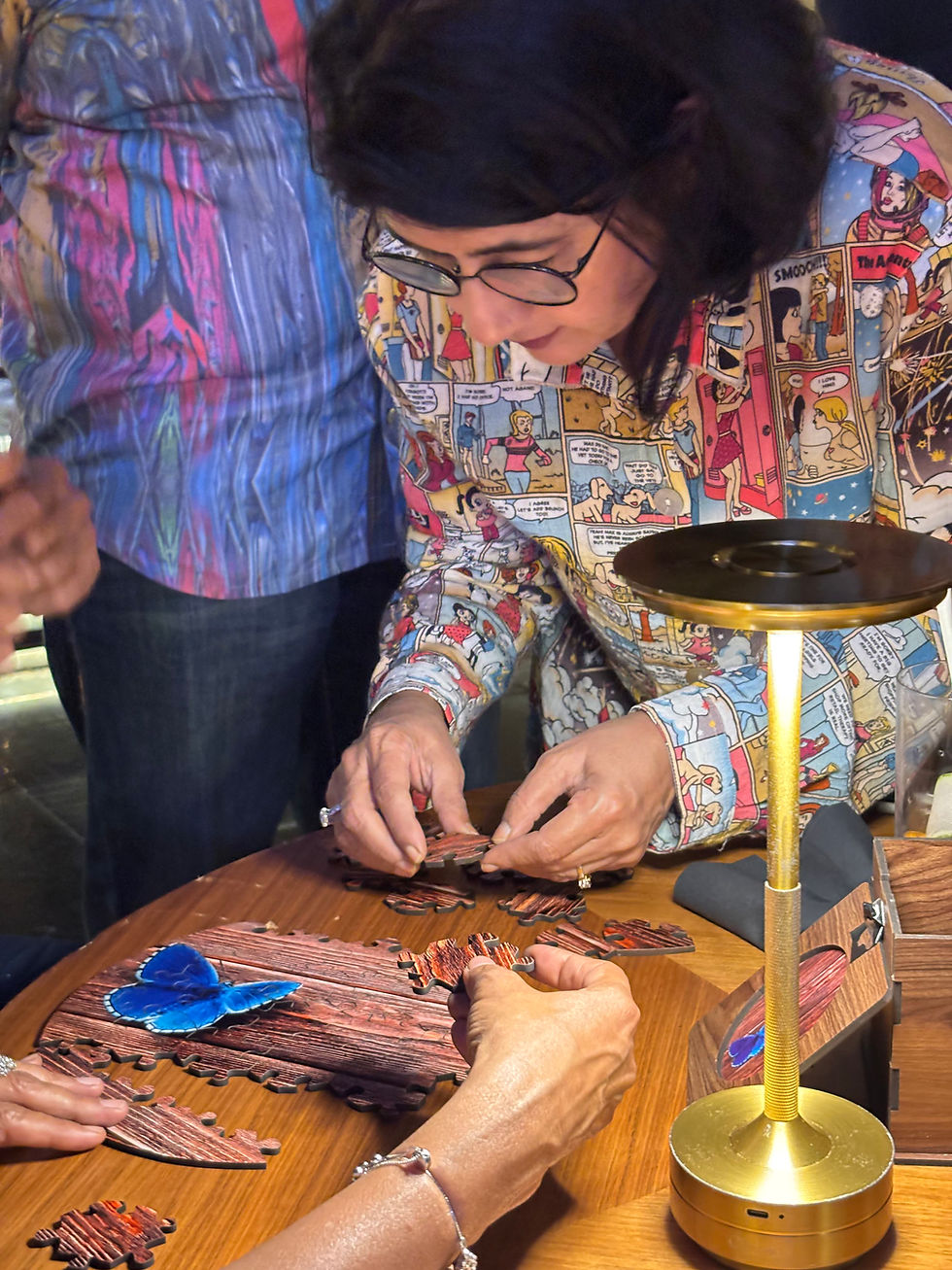
Unlike screen-based apps that fade from memory the moment they're closed, physical puzzles ask the brain to do real work:
Every piece forces your eyes, hands, and memory to cooperate
You recall shapes, colors, and patterns from moments earlier
You test that recall against the piece in your hand
This is exactly why memory games for seniors built around jigsaw puzzles are recommended so often by caregivers; they engage short-term recall without feeling like a chore.
The Cognitive Payoff, Broken Down
Regularly working on wooden puzzles isn't just a way to pass time; it's a low-cost habit with real benefits:
Sharper short-term memory: remembering piece shapes and where they belong strengthens recall pathways.
Better visual-spatial reasoning: matching colors and edges trains the brain to "see" relationships faster.
Improved focus and patience: puzzles reward sustained attention over quick wins.
A possible buffer against cognitive decline: mentally active hobbies are consistently linked to slower age-related decline.
Fine motor practice: picking up, rotating, and placing pieces keeps hand-eye coordination in shape.
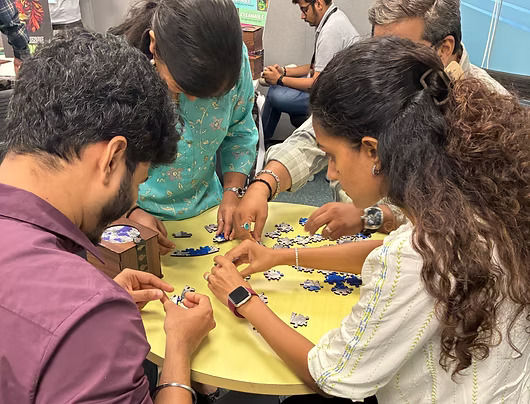
Puzzles also double as a quiet, screen-free ritual for mindfulness or family connection, without the overstimulation digital games can bring.

Not All Puzzles Are Built the Same
This is where memory games for seniors need a little nuance. Too easy gets boring; too hard causes frustration instead of engagement.
That's why AdultJigsaw organises its wooden jigsaw puzzles into clear levels and stages from beginner-friendly sets up to expert and master tiers so every puzzler starts where they're comfortable and progresses naturally.
The levels simply exist as a ladder to climb; just pick one and start.
Our signature hexagon-cut CircZles puzzles also add irregular, non-obvious piece shapes that traditional cardboard jigsaws don't offer, asking the brain to work a little harder exactly the kind of challenge that keeps memory games for seniors effective over time.
Conclusion
Memory games for seniors don't need to be complicated or expensive; sometimes the best cognitive workout comes from a table, a picture, and a handful of wooden pieces.
Jigsaw puzzles blend memory training, patience, and genuine enjoyment; few other activities match.
Every piece placed, from beginner to advanced tiers, is a small win for the brain worth building on.
Ready to try memory games for seniors that actually feel like fun? Shop AdultJigsaw's premium wooden puzzle collection today.
Citations
Fissler, P. et al. "Jigsaw Puzzles As Cognitive Enrichment (PACE)" : study protocol, NIH/NCBI: https://www.ncbi.nlm.nih.gov/pmc/articles/PMC5588550/
Fissler, P. et al. "Jigsaw Puzzling Taps Multiple Cognitive Abilities and Is a Potential Protective Factor for Cognitive Aging" : NIH/NCBI: https://www.ncbi.nlm.nih.gov/pmc/articles/PMC6174231/
"The Effect of the Jigsawdio Program on Cognition Among Older Adults with Dementia" : NIH/NCBI: https://www.ncbi.nlm.nih.gov/pmc/articles/PMC10736734/

Comments