
Brain Stimulating Activities: Give Your Mind Something to Chew On
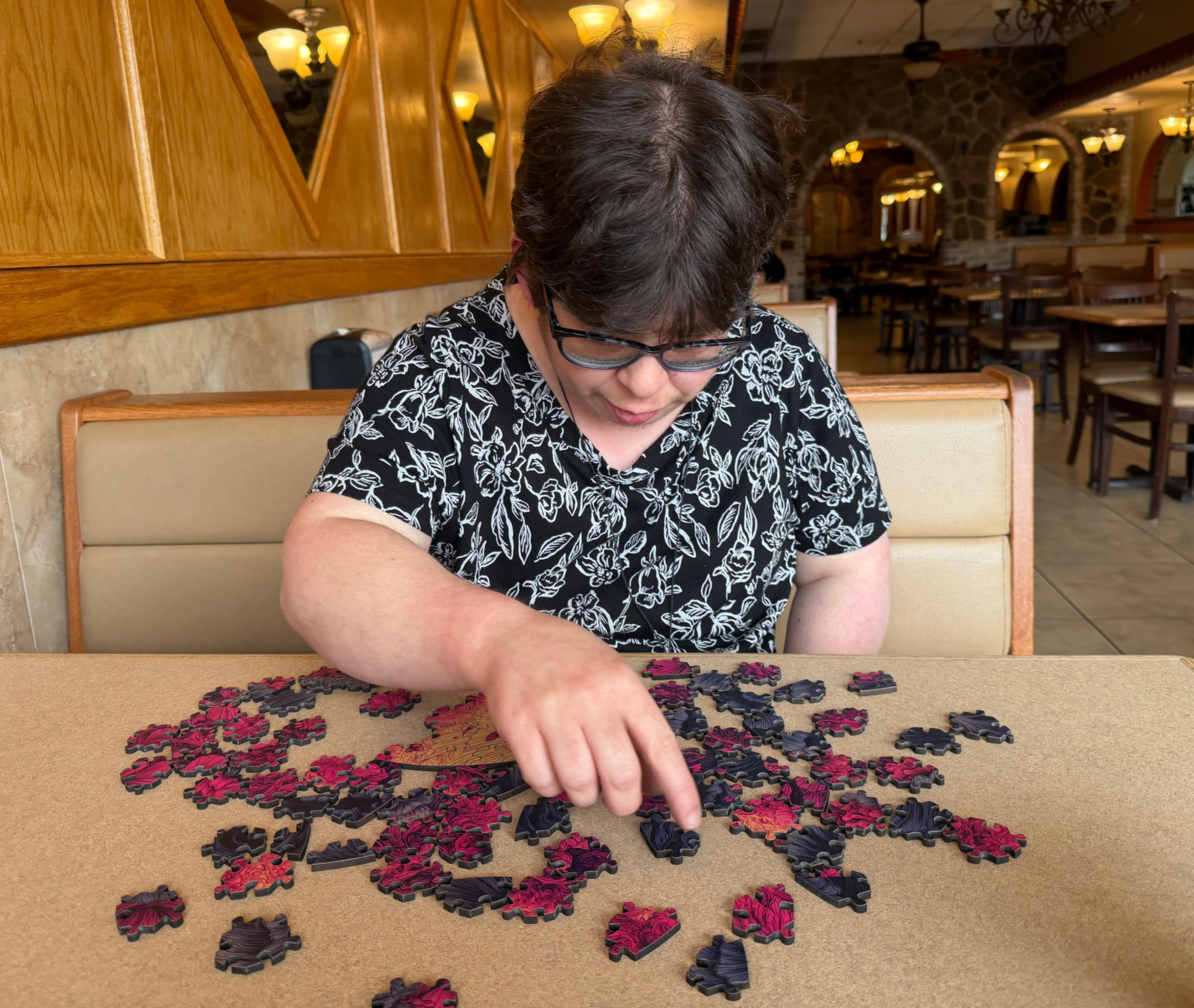
Not every workout happens at the gym.
Some of the most effective brain stimulating activities happen at a table, with a cup of coffee, and a picture that doesn't yet exist.
AdultJigsaw turns an old-school pastime into one of the sharpest brain stimulating activities you can add to your week: no equipment, no subscription, just pieces waiting to be placed.
Why Solving Counts as Real Brain Stimulation
Every time you scan for a piece, test if it fits, and adjust, your brain is doing genuine work; this is exactly what makes puzzles some of the most reliable brain stimulating activities around.
Here's what's actually happening under the hood:
Working memory gets a workout: you're holding shapes, colors, and patterns in mind while comparing them to what's in your hand
Visual-spatial reasoning sharpens: your brain constantly recalculates how pieces relate to each other
Problem-solving pathways strengthen: each stuck moment forces a new strategy, not just repetition
Focus and patience build together: sustained attention is a skill, and puzzles quietly train it
The Science of Rewiring Your Brain
This isn't just a nice idea; it's backed by real neuroscience.
Your brain rewires itself through neuroplasticity, forming new neural connections every time it's challenged in a new way:
Sustained engagement in cognitively demanding activities has been shown to enhance memory function, even in older adults
Puzzle-solving activates working memory, episodic memory, and reasoning simultaneously a rare combination for a single activity
Regular mental challenge builds cognitive reserve, giving the brain more resilience against future decline a direct benefit of ongoing neuroplasticity
CircZles are built with this in mind; their hexagonal, no-corners layout removes the usual shortcuts, so your brain can't coast on autopilot and keeps building new connections instead.

Products That Make the Mental Workout Fun
Not every puzzle challenges the brain the same way, which is why AdultJigsaw's levels and stages are organised for real progress:
Beginner CircZles: a gentle entry point that still demands full attention
Mid-stage sets: enough complexity to keep working memory engaged longer
Advanced 25-level CircZles: for anyone chasing real cognitive gains over time
CogZart Puzzle Saver Board: lets you pause and return without losing progress, so the mental workout continues across sessions
Building Cognitive Sharpness Into Your Routine
You don't need hours to benefit.
A short daily session with a CircZle is enough to keep your brain reaching for cognitive sharpness instead of coasting.
Consistency matters more than duration a few focused minutes, repeated often, build real cognitive reserve over time.
Conclusion
Brain stimulating activities don't have to feel like homework to actually work, and that's exactly what a well-designed puzzle delivers.
Between the memory training, problem-solving, and neuroplastic benefits, CircZles gives your mind a genuine, enjoyable reason to stay sharp.
If you're looking for brain stimulating activities that fit into everyday life, this is worth adding to your routine.
Ready to try brain stimulating activities your mind will thank you for?
Shop at AdultJigsaw today.
Citations
Park, D.C. et al. "The Impact of Sustained Engagement on Cognitive Function in Older Adults: The Synapse Project" — PubMed: https://pubmed.ncbi.nlm.nih.gov/24214244/
"Cognitive Interventions for Memory and Psychological Well-Being in Aging and Dementias" — Frontiers in Psychology: https://www.frontiersin.org/journals/psychology/articles/10.3389/fpsyg.2023.1070012/full
"Cognitive Activity Is Associated with Cognitive Function Over Time in a Diverse Group of Older Adults" — PubMed: https://pubmed.ncbi.nlm.nih.gov/37263261/


Comments