
Unlocking Cognitive Potential Through Puzzling
Updated: Apr 10
Maintaining a sharp and agile mind requires consistent engagement and novelty. Just as the body thrives on physical movement, the brain flourishes when challenged with new and stimulating activities. Seeking enjoyable ways to boost cognitive function often leads enthusiasts to the timeless art of puzzling. This delightful method keeps the mind active and vibrant.
Effective Brain Exercises for Memory Enhancement
Engaging with a jigsaw puzzle acts as a rigorous workout for the brain. It demands the simultaneous use of both the left and right hemispheres—logic and creativity working in unison. This dual activation strengthens neural connections and improves short-term memory. As you scan for a specific shape or color, your mind holds the larger picture in suspension. This process reinforces working memory capacity. Consequently, incorporating brain exercises for memory into your leisure time provides a proactive approach to sustaining mental clarity and focus.

Elevating the Workout with Premium Tactile Engagement
At Adult Jigsaw, we transform this cognitive workout into a luxurious experience. Our puzzles distinguish themselves through the use of premium, durable wood. This material offers a tactile satisfaction that enhances the activity. The unique "CircZles" collection introduces a fascinating twist with hexagonal cuts and circular boundaries. This irregularity forces the brain to abandon standard grid patterns. It encourages the development of new spatial reasoning strategies. Handling pieces from the "Planet Round Wooden Jigsaw Puzzle" or the intricate "Sacred Geometry Alpha Blue" provides sensory stimulation that further cements the memory of the experience.
Strengthening Focus through Visual Complexity
The complexity of the image matters significantly for cognitive gain. High-contrast, detailed designs like our "Colorstorm" series or the mesmerizing "Metamorphosis" require intense concentration and pattern recognition. Identifying subtle color gradients and matching them to specific shapes exercises visual memory and attention to detail. This process of continuous problem-solving releases dopamine. This release reinforces a positive mood and motivation.
Cultivating a Lifelong Habit of Mental Agility
Establishing a dedicated space for this practice ensures consistency. Using tools like our Universal Puzzle Saver Board allows you to keep your progress intact. This makes it easy to return to your mental gym daily. By prioritizing brain exercises for memory, you choose a path of lifelong curiosity and intellectual vitality. Every piece placed is a step toward a stronger, more resilient mind.
The Joy of Puzzling: A Community Experience
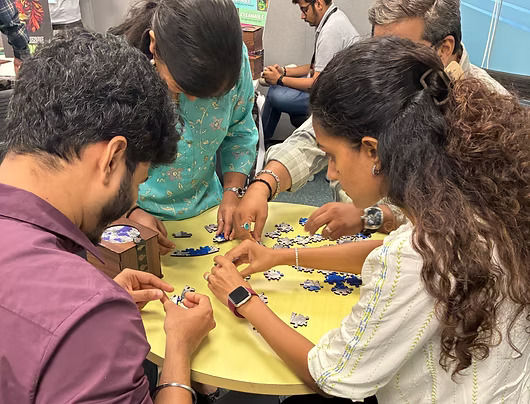
Puzzling can also be a social activity. Gathering friends or family to work on a puzzle together fosters collaboration and communication. Sharing ideas and strategies can enhance the experience. It creates a sense of community and connection. This social aspect adds another layer of enjoyment to the activity.
Choosing the Right Puzzle for You
When selecting a jigsaw puzzle, consider your interests and skill level. Puzzles come in various themes and difficulties. Whether you prefer landscapes, abstract art, or intricate designs, there is something for everyone. Start with simpler puzzles if you are new to this hobby. Gradually challenge yourself with more complex designs as your skills improve.
Incorporating Puzzles into Your Routine
To make puzzling a regular part of your life, set aside dedicated time each week. This could be an hour on weekends or a few minutes each day. Creating a routine helps you stay committed to this mental workout. You may find that you look forward to this time as a way to unwind and recharge.
Challenge your mind and elevate your collection. Shop the unique wooden puzzles and CircZles at Adult Jigsaw today!
Citations:
Frontiers in Aging Neuroscience - Jigsaw Puzzling Taps Multiple Cognitive Abilities
Mayo Clinic - Maximize Memory Function with Active Engagement
National Institute on Aging - Cognitive Health and Older Adults


Comments